
The Real Difference Between Handmade and Store-Bought Furniture in Tulsa
Most homes are filled with fast furniture.
It looks fine in the showroom. It photographs well. It arrives in flat boxes with assembly instructions and an Allen wrench. You set it up, style it, and move on.
Then six months pass. The finish starts chipping. A leg wobbles. A drawer sticks. Two years later, you're replacing it.
Fast furniture is built to sell, not to last.
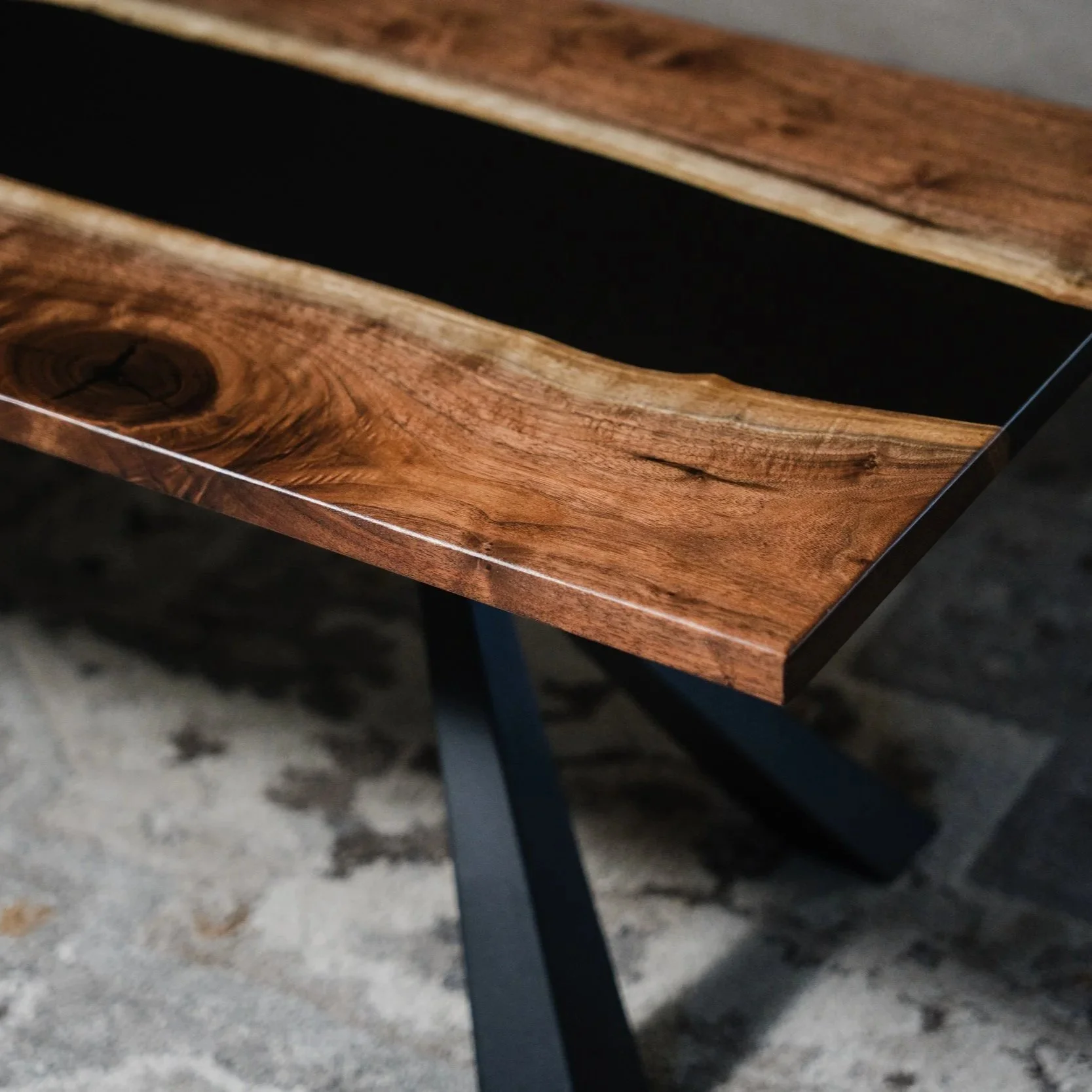
Handmade furniture is different. It's built slow, built with intention, and built to live with your family for decades. It's made from real wood, assembled with traditional joinery, and finished by hand. It costs more upfront, but it outlasts everything else in your home.
The difference isn't just in how it's made. It's in how it lives with you—and how long it stays.
If you're weighing the choice between a store-bought table and a custom one, this guide breaks down what you're actually buying with each option.
How Each One Is Built
The process reveals the priorities.
Handmade Furniture
Built in a small shop. One craftsman or a small team. Real wood selected by hand. Each joint is measured, cut, and test-fit. Every surface is sanded smooth. The finish is applied in layers and left to cure.
Human eyes check every detail. If something isn't right, it's fixed before the piece leaves the shop.
The pace is slow because the goal is quality, not volume.
Store-Bought Furniture
Built in factories. Machines cut identical parts. Workers assemble them on a line. Compressed materials keep costs low. Finishes are sprayed fast and dry fast. Pieces are boxed and shipped within hours.
The goal is efficiency. Speed. Volume. Get it out the door and onto the truck.
Quality control happens in batches, not individually. Defects slip through. Returns happen. Replacements get sent.
The Mindset Difference
Handmade furniture asks: Will this last?
Store-bought furniture asks: Can we ship it faster?
That difference shows up in every joint, every finish, and every year of use.
Materials That Tell the Truth
Materials don't lie. They reveal what a piece is really made of—and how long it will last.
Hardwood vs. Particleboard
Hardwood is solid lumber—walnut, oak, cherry, maple. It's dense, strong, and stable. It can be sanded, refinished, and repaired. It holds joinery tight. It ages beautifully.
Particleboard (also called MDF or fiberboard) is compressed wood chips and glue. It's light, cheap, and breaks easily. Once it chips or cracks, you can't fix it. Screws pull out. Joints fail. Moisture causes it to swell and crumble.
Veneer vs. Solid Lumber
Veneer is a thin slice of real wood glued onto particleboard or plywood. It looks like wood on the surface, but underneath it's composite material. If the veneer chips or peels, the fake core shows through.
Solid lumber is wood all the way through. What you see is what you get. Scratches can be sanded out. Dents can be steamed and buffed. The integrity never changes.
Weight, Durability, and Repairability
Solid wood is heavy. That's a good thing. Weight means density. Density means strength.
Store-bought furniture feels light because it's made of lightweight materials. It tips easier. It dents easier. It breaks easier.
And when it breaks, you can't repair it. You replace it.
Tip from the craftsman: Real wood ages with you, not against you. It gets better over time. Particleboard just gets worse.
Craftsmanship and Joinery
Joinery is what holds furniture together. It's also what determines how long it lasts.
Joints That Last Decades
Mortise and tenon: A peg (tenon) fits into a matching hole (mortise). Glue and friction lock it in place. This joint has been used for centuries because it's incredibly strong.
Dowels: Wooden pegs are glued into precisely drilled holes, aligning two pieces of wood. When done right, dowel joints hold tight for generations.
Dovetails: Interlocking wedge-shaped cuts that fit together like puzzle pieces. Used in drawers and boxes. Nearly impossible to pull apart.
These joints rely on precision, patience, and skill. They don't need metal brackets or screws to stay strong.
What Store-Bought Furniture Uses
Screws. Staples. Cam locks. Metal brackets. Dowels made of plastic or compressed wood.
These fasteners work—for a while. But they loosen over time, especially in lightweight materials like particleboard. Once a screw pulls out of particleboard, it won't hold again. The hole is stripped. The joint fails.
Why This Matters
Handmade furniture holds together because the joints are engineered into the wood itself. Store-bought furniture holds together because of hardware—and hardware fails.
When joinery is solid, the table doesn't wobble after five years. The chairs don't creak. The drawers don't stick.
Section 4: Finishing Quality
The finish protects the wood. But not all finishes are created equal.
What a Real Finish Feels Like
Smooth. Silky. Even. A hand-applied finish has depth—it enhances the grain, brings out the color, and feels luxurious under your fingertips.
At Five Feathers, we build finishes in layers. Each coat is applied by hand, allowed to dry, lightly sanded, and followed by the next coat. After the final layer, the finish cures for at least a week before delivery.
This process creates a protective barrier that's durable, clear, and resilient. It resists moisture, heat, and scratches. It doesn't chip easily. And if it ever dulls, it can be buffed or refinished.
How Factory Finishes Are Applied
Sprayed on in one or two coats. Dried quickly with heat lamps or UV light. Shipped within hours.
Factory finishes look fine at first. But they're thin. They don't penetrate the wood. They sit on top like a coat of paint—and they chip, scratch, and peel just as easily.
Once the finish fails, moisture gets in. The wood warps. The surface stains. The piece deteriorates.
Why the Finish Protects the Investment
A quality finish is the difference between a table that lasts 5 years and a table that lasts 50 years.
It's not just aesthetic. It's structural. The finish seals the wood, protects it from humidity, and keeps it stable. Without a proper finish, even solid wood won't hold up.
Longevity and Repair
Here's the real test: What happens when something goes wrong?
Handmade Pieces Can Be Repaired
Scratches can be sanded and refinished. Dents can be steamed out. Loose joints can be re-glued. Worn finishes can be stripped and reapplied.
Solid wood furniture is built to be maintained and restored. A table that's 20 years old can look brand new with a professional refresh.
You don't throw it away. You bring it back to life.
Store-Bought Pieces Are Replaced, Not Restored
When particleboard cracks, you can't fix it. When veneer peels, you can't re-glue it. When a cam lock fails, tightening it doesn't help—the material around it has already stripped.
Store-bought furniture is designed to be disposable. When it breaks, you buy a new one.
Real-World Examples
A handmade walnut table built in 2005 can be refinished in 2025 and look as good as the day it was delivered—better, even, because walnut darkens and warms with age.
A store-bought table from 2020 is already wobbly, scratched, and fading by 2025. It ends up on the curb or in a landfill.
Long-Term Savings
Let's say a store-bought table costs $800 and lasts 5 years. Over 30 years, you've bought 6 tables. That's $4,800.
A handmade table costs $4,000 and lasts 30+ years. Over the same period, you've spent less—and you still own something valuable.
The math is clear. Heirloom builds save money in the long run.
Custom Fit for the Home
One size does not fit all.
Handmade Adapts to the Room
Custom furniture is built for your space. Your measurements. Your layout. Your life.
Need a table that's 68 inches long to fit between two windows? Done. Want the height adjusted so it matches your vintage chairs? No problem. Prefer rounded corners because you have young kids? Easy.
Handmade furniture bends to your needs.
Store-Bought Forces the Home to Adapt
You pick from what's available. If the table is too big, you rearrange the room. If it's too small, you settle. If the height doesn't work, you buy new chairs.
You're not building around your life. You're building around inventory.
Tulsa Homes, Open Layouts, and Unique Measurements
Tulsa homes—especially newer builds—often feature open-concept layouts. Dining spaces flow into kitchens and living rooms. Standard furniture doesn't always fit the flow.
A custom table anchors the space without blocking sightlines. It defines the dining zone without feeling cramped. It fits the room like it was always meant to be there.
Because it was.
Emotional Value
There's something different about owning a piece built just for you.
The Meaning Behind It
You didn't pick it off a shelf. You designed it. You chose the wood. You talked through the details. You watched it come to life.
That process creates connection. The table isn't just furniture. It's a collaboration. A story. A piece of your home's identity.
How It Changes How People Treat It
People treat handmade furniture differently. They wipe up spills faster. They use coasters. They move things carefully.
Not because they're afraid of damaging it, but because they respect it. They know what went into it. They know it's not replaceable.
How It Becomes Part of the Stories Shared Around It
Thanksgiving dinners. Birthday cakes. Late-night conversations. Homework battles. Game nights.
The table holds the memories. And when your kids are grown and dividing up the estate, they'll fight over who gets it—not because of its price, but because of what it represents.
Environmental Impact
Sustainability isn't just a buzzword. It's a byproduct of building things that last.
Handmade Uses Fewer Materials
One tree. One table. Minimal waste. Offcuts get used for smaller projects or donated. Finishes are applied carefully, not over-sprayed.
The process is efficient because every piece of wood matters.
Handmade Creates Less Waste
A table built to last 50 years doesn't end up in a landfill. It stays in the home, gets passed down, and continues serving the next generation.
Handmade Lasts Far Longer
Longevity is the most sustainable practice. Building something once that lasts decades uses fewer resources than building and replacing something every few years.
Store-Bought Furniture Creates a Cycle of Disposal
Cheap materials. Short lifespan. Frequent replacements. Each cycle adds to the landfill.
Particleboard doesn't biodegrade. Synthetic finishes leach chemicals. Metal hardware rusts and contaminates.
Fast furniture isn't just bad for your home. It's bad for the planet.
Price vs. Value
Price is what you pay. Value is what you get.
Handmade Costs More Upfront
A custom walnut table might cost $4,000. That's a real number. It's not cheap.
But here's what you're paying for:
Solid hardwood that lasts decades
Hand-cut joinery that doesn't fail
A finish that protects and beautifies
A design that fits your home perfectly
A piece that can be repaired, refinished, and passed down
Store-Bought Costs More Over Time
A $600 table seems affordable. But when you replace it every 5 years, you've spent $3,600 over 30 years—and you still don't own anything valuable.
You're renting furniture on an installment plan.
How Value Is Measured in Longevity, Not Price Tags
Value isn't about the sticker price. It's about cost per year of use.
A $4,000 table that lasts 40 years costs $100 per year.
A $600 table that lasts 5 years costs $120 per year.
The handmade table is the better deal. And at the end, you still own an heirloom worth thousands.
Sooo now what?
Fast furniture fills the room. Handmade furniture anchors it.
One is built to sell. The other is built to stay. One ages poorly. The other ages beautifully. One gets replaced. The other gets refinished and passed down.
The difference is in the materials, the methods, and the mindset. Handmade furniture is intentional. It's crafted slowly, with care, for people who value quality over convenience.
It keeps its beauty. Its strength. Its story.
It's built slow for a reason.
Share Your Vision
Ready to invest in a piece that becomes part of your story?
Reach out to Five Feathers and share your vision. We'll walk you through the process, answer your questions, and design something built to last—not just for you, but for the next generation.
We take limited orders to preserve quality. If you're ready, let's start the conversation.