
How Much Does a Custom Table Cost in Tulsa - A Pricing Guide
How Much Does a Custom Table Cost in Tulsa
Introduction
Custom furniture is an investment.
Not the kind you make lightly, but the kind that reflects craftsmanship, material quality, and thoughtful design. It's not about finding the cheapest option. It's about choosing something built to last—and understanding what you're paying for.
People search for pricing because they want clarity before reaching out. They want to know if custom is within reach. They want to understand what drives the cost and whether it's worth it.
This guide provides that clarity.
We'll walk through what influences the price of a custom table in Tulsa—size, wood species, joinery, finish, and design complexity—and give you real ranges so you know what to expect.
Custom pricing isn't arbitrary. It's rooted in materials, time, and craft. Here's how it all breaks down.
Why Custom Costs More Than Store-Bought
A custom table costs more because it's built differently.
Real Wood vs. Manufactured Wood
Store-bought tables use particleboard, MDF, or thin veneers over plywood. These materials are cheap, light, and mass-produced.
Custom tables use solid hardwood—walnut, oak, cherry, maple. Real lumber costs more. It's heavier, denser, and far more durable. It can be sanded, refinished, and passed down.
Design Work
Store-bought furniture comes in fixed sizes and styles. You choose from what's available.
Custom furniture is designed for your space. Measurements are tailored. Proportions are adjusted. Every detail is intentional. That design work takes time—and time has value.
Joinery Quality
Mass-produced furniture relies on screws, brackets, and cam locks. They're fast to install but weak over time.
Custom furniture uses traditional joinery—mortise and tenon, dowels, dovetails. These joints are hand-cut, precise, and built to last decades. They don't loosen. They don't fail.
Slow Build Methods
Factory furniture moves down an assembly line. Pieces are cut, assembled, and finished in hours.
Custom furniture is built one at a time. Each joint is test-fit. Each surface is hand-sanded. The finish is applied in layers and left to cure. The process is slow because the goal is quality, not speed.
Long-Term Durability
A store-bought table lasts 3 to 7 years before it wobbles, chips, or falls apart.
A custom table lasts 30, 50, even 100 years. It can be refinished. It can be repaired. It becomes an heirloom.
The mindset shift: You're not paying for a table. You're paying for decades of use, beauty, and memories.
The Core Factors That Shape Cost
Every custom table is priced individually. Here's what influences that price.
Size
Bigger tables use more wood, more finish, and more time. A 48-inch round table costs less than a 72-inch rectangular one—not just because of material, but because of the labor involved in milling, sanding, and finishing larger surfaces.
Wood Species
Different woods have different costs. Walnut is more expensive than oak. Rare or figured wood (like curly maple or spalted wood) costs even more.
Wood pricing also shifts with availability. If walnut is in high demand or short supply, the price goes up.
Leg Style and Material
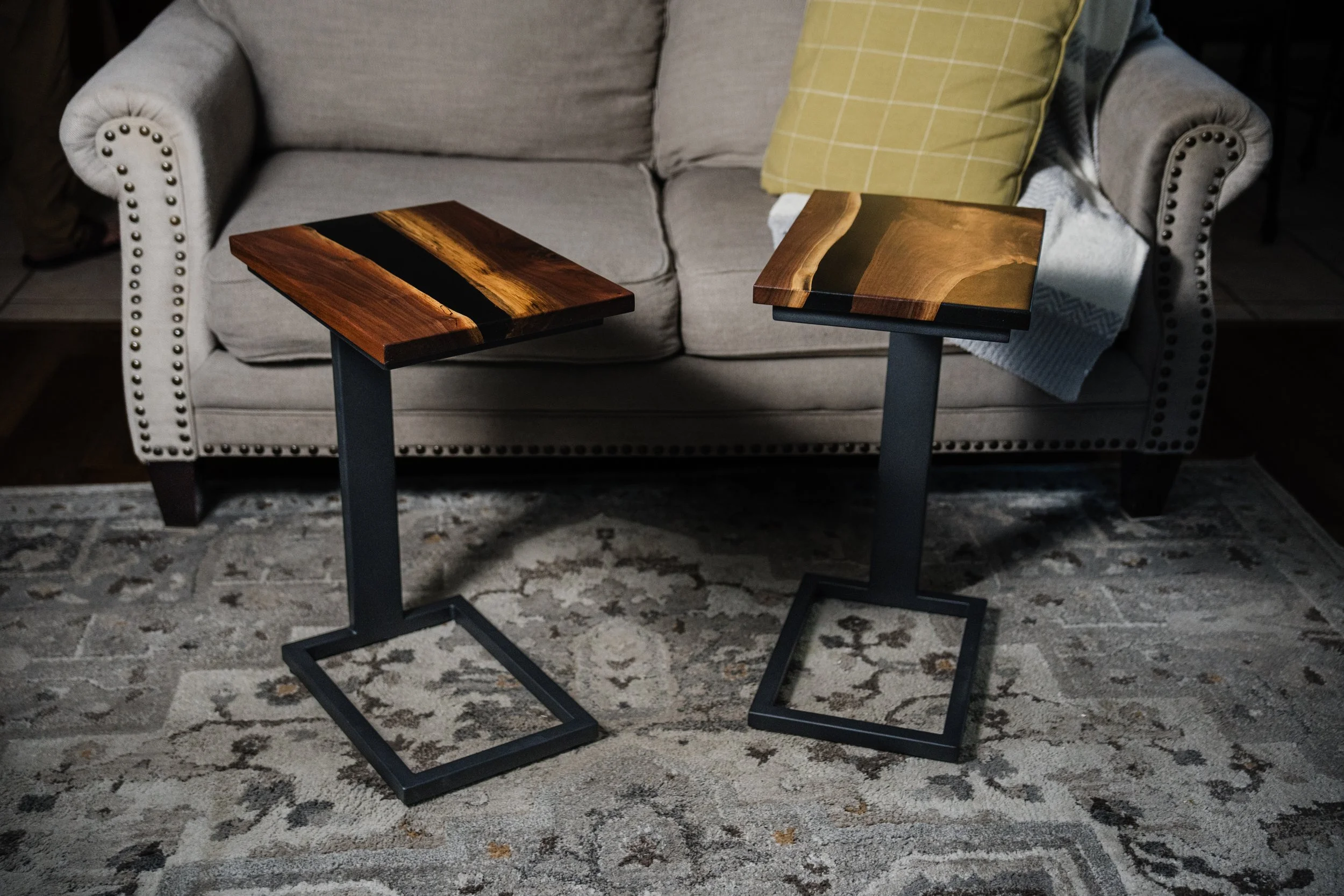
At Five Feathers, most tables are built with steel powder-coated matte black legs. These are custom-made in the USA—extremely durable and robust. They're fabricated to fit your exact table dimensions and designed to handle decades of use without wobbling or weakening.
Steel legs are modern, industrial, and cost-effective compared to custom wood legs.
Custom wood legs are available, but they cost more. Unlike steel legs, wood legs aren't pre-fabricated—they're milled, shaped, joined, and finished from scratch. If you want turned legs, tapered legs, or hand-carved details, expect the price to reflect that additional labor and craftsmanship.
Joinery Type
Simple joinery (like dowels) takes less time than complex joinery (like hand-cut mortise and tenon or breadboard ends). More intricate joinery means more skill, more precision, and more hours in the shop.
Edge Style
A straight, square edge is straightforward. A live edge (where the natural bark edge is preserved and smoothed) requires extra work—finding the right slab, removing bark, sanding curves, stabilizing knots.
Chamfered, rounded, or sculpted edges also add time.
Finish Type
At Five Feathers, we finish every table with Rubio Monocoat Hard Wax Oil—applied in three coats. This finish penetrates deep into the wood, protecting it from moisture, heat, and daily wear while bringing out the natural grain and color.
Rubio is durable, food-safe, and easy to maintain. It doesn't sit on top of the wood like traditional polyurethane—it becomes part of the wood itself.
The takeaway: Every choice you make affects the final price. But each choice also shapes how the table looks, feels, and lasts.
Typical Cost Ranges in Tulsa
These are general ranges based on real projects. Every table is unique, but these numbers give you solid grounding.
Small Tables (30"–48" diameter or length)
Examples: Breakfast nook tables, small round dining tables, end tables
Price range: $1,800–$3,200
What affects it: Wood type, base complexity, edge style
Medium Dining Tables (60"–72" long)
Examples: Standard family dining tables, rectangular or oval designs
Price range: $3,200–$5,500
What affects it: Wood species, joinery detail, edge style, leg design
Large Statement Tables (custom shapes or live edge slabs)
Examples: Live-edge slabs, oversized gathering tables, unique custom builds
Price range: $5,500–$9,000+
What affects it: Size, rare wood, design complexity, custom inlays or details
Why Ranges Exist
A simple 72-inch oak table with steel legs and a standard edge might cost $3,500.
A 72-inch walnut table with custom wood legs, live edges, and intricate joinery might cost $6,500.
Same size. Very different builds.
At Five Feathers, our current capacity allows us to build tables up to 72 inches long by 28 inches wide. If you're envisioning something larger, let's talk—we're always exploring ways to grow.
Wood Species and Their Price Impact
Wood choice is one of the biggest cost drivers. Here's why.
Walnut
Cost level: High
Why: Walnut is in high demand, grows slower than other hardwoods, and has rich, chocolate-brown tones with dramatic grain. It's dense, durable, and ages beautifully—lightening slightly and developing a warm patina over decades.
Walnut is the premium choice for heirloom furniture.
White Oak
Cost level: Moderate
Why: White oak is widely available, incredibly strong, and has a cooler, neutral tone with prominent grain. It's a workhorse wood—classic, durable, and timeless. It darkens slightly with age and handles moisture better than most hardwoods.
White oak is ideal for families who want strength and tradition.
Cherry
Cost level: Moderate to high
Why: Cherry starts light (almost blonde) and darkens to a rich reddish-brown over the years. It has a fine, smooth grain and a luxurious feel. Cherry changes more dramatically than any other wood—what you see on day one will look completely different in five years.
Cherry is perfect for people who love wood that evolves.
Maple
Cost level: Moderate
Why: Maple is hard, dense, and light in color with a subtle grain. It's durable and takes stain well if you want to adjust the tone. Figured maple (like curly or tiger maple) costs significantly more because of its rare, wavy grain patterns.
Maple works for clean, modern designs or traditional styles.
Why Some Woods Cost More
Availability: Scarce woods cost more.
Growth rate: Slow-growing trees (like walnut) are pricier.
Board quality: Wide, clear boards without knots or defects command higher prices.
Sustainability: Responsibly sourced lumber often costs more but supports better forestry practices.
Design Complexity
Design affects both labor and material costs.
Steel Legs vs. Custom Wood Legs
Steel powder-coated matte black legs are our standard option. They're custom-made in the USA—extremely durable and robust. These legs are built to support heavy hardwood tops without flexing, wobbling, or weakening over time. They're designed for decades of use and pair beautifully with modern, industrial, or transitional styles.
Steel legs are clean, strong, and cost-effective.
Custom wood legs are an upgrade. These aren't pre-made—they're milled from the same hardwood as your tabletop (or a contrasting species if you prefer). Wood legs require more time: milling, shaping, joinery, sanding, and finishing. If you want turned legs, tapered profiles, or carved details, the cost increases further.
Wood legs create a fully cohesive look, especially for traditional or farmhouse styles. Steel legs work beautifully for sleek, contemporary, or rustic-modern designs.
Live Edge vs. Standard Edge
Standard edges are straight and predictable. They're milled from dimensional lumber and finished smooth.
Live edges preserve the natural edge of the tree. They require sourcing large slabs, removing bark, stabilizing cracks, and sanding curves. The result is stunning—but it's more labor-intensive.
Curves, Inlays, and Patterns
Adding curves to the tabletop requires custom cutting and shaping. Inlays (like contrasting wood strips or metal accents) require precision and extra materials. Patterns (like herringbone or chevron) require careful layout and matching.
Each of these elements adds beauty—and cost.
How Design Time Influences Cost
Complex designs take longer to plan, longer to build, and longer to finish. But they also create one-of-a-kind pieces that no one else has.
If you want something unique, expect the price to reflect that uniqueness.
The Hidden Value of Handcrafted Work
Price is what you see. Value is what you get.
Longer Lifespan
A custom table built from solid walnut with mortise-and-tenon joinery will outlast 5 or 6 store-bought tables. You're not buying furniture. You're buying decades.
Repairability
Scratches can be sanded. Dents can be steamed. Worn finishes can be refinished. A custom table can be restored to like-new condition—store-bought particleboard cannot.
Finish That Resists Daily Life
Rubio Monocoat Hard Wax Oil penetrates deep into the wood, protecting it from moisture, heat, and scratches. It's built to handle real life—kids, pets, spills, and daily use.
Factory finishes chip and peel within months.
Heirloom Potential
Custom furniture gets passed down. It becomes part of family stories. It anchors the home for generations.
Store-bought furniture ends up on the curb.
Contrast with Fast Furniture
A $600 table that lasts 5 years costs $120 per year.
A $4,000 table that lasts 40 years costs $100 per year—and you still own something valuable at the end.
The handmade table is the better investment.
What You Get When You Choose Custom in Tulsa
Buying local isn't just a tagline. It's a tangible advantage.
Local Wood Sources
Wood sourced closer to home means shorter supply chains, better quality control, and support for regional mills.
Local Craftsmanship
You're talking to the person building your table. Not a customer service rep. Not a warehouse manager. The craftsman.
That direct communication means faster answers, clearer expectations, and a smoother process.
Real Conversations
Design isn't done through a form or a chatbot. It's done through conversation—understanding your space, your life, and your vision.
A Build Process Shaped Around Your Home
Your table is designed for your room, your style, and your needs. It's not pulled from inventory. It's built for you.
Community Connection
When you buy custom in Tulsa, you're supporting local businesses, local families, and local craft traditions. Your money stays in the community.
Understanding Long-Term Value
Value isn't measured in the price tag. It's measured in years of use.
Cost Per Year of Use
Let's break it down:
Table Type Upfront Cost Lifespan Cost Per Year Store-bought $600 5 years $120/year Custom (moderate) $4,000 40 years $100/year Custom (high-end) $7,000 50+ years $140/year
The custom table costs less per year—and you still own an heirloom at the end.
How Heirloom Pieces Reduce Future Replacements
Store-bought furniture creates a cycle: buy, replace, repeat. Every 5 years, you're shopping again.
Heirloom furniture ends that cycle. You buy once. It lasts a lifetime. You pass it down.
Why Choosing Well Once Saves More Money
Cheap furniture is expensive in the long run. The cost compounds. The quality never improves.
Investing in one well-built piece saves money, reduces waste, and gives you something beautiful to live with every day.
When to Invest More
Not every table needs to be a showpiece. But some moments call for more.
Large Family Gatherings
If your table is the place where holidays happen, where extended family gathers, where memories are made—it deserves to be built strong and beautiful.
Homes with Open Layouts
In open-concept homes, the dining table is visible from multiple rooms. It anchors the space. It sets the tone. It's worth investing in a piece that feels intentional.
A Table Meant to Anchor the Space
Some tables are just functional. Others define the room. If your table is the centerpiece—the thing people notice when they walk in—choose quality.
A Piece Intended to Become an Heirloom
If you're building something meant to last beyond your lifetime, invest in the materials, craftsmanship, and design that make that possible.
Heirlooms aren't accidents. They're intentional.
Conclusion
A custom table is not a purchase. It's a partnership.
Between you and the craftsman. Between your vision and the wood. Between the present and the future.
It's built slow. Built thoughtfully. Built for decades.
The cost reflects the materials, the skill, and the time—but more than that, it reflects the intention. You're not buying speed or convenience. You're buying something that will anchor your home, hold your family's stories, and outlast everything else in the room.
That's not an expense. That's an investment.
Share Your Vision
Ready to start the conversation?
Reach out to Five Feathers and share your space, your vision, and your measurements. We'll walk you through the process, answer your questions, and provide a tailored estimate and timeline for your custom table.
Let's build something that lasts.