
How to Choose a Custom Table for Your Home in Tulsa
Your home tells a story. Not the one staged for guests or curated for feeds—the real one. The story of weeknight dinners and Saturday morning pancakes. Of homework spread across the table and conversations that stretch long after the dishes are cleared.
A custom table anchors that story.
In Tulsa, more families are choosing heirloom pieces over fast furniture. Not because they're chasing a trend, but because they're tired of replacing things that weren't built to last. They want something that holds up to real life. Something their kids will fight over one day when they're dividing up the estate.
Fast furniture falls apart. Custom furniture becomes part of the family.
This guide walks you through how to choose a custom table that fits your space, your life, and your story—without the overwhelm or the guesswork.
Start with Your Space
Before you fall in love with a design, measure your room. Twice.
Here's what matters:
Room size. You need at least 36 inches of clearance around the table so chairs can pull out and people can walk by without turning sideways. If your dining room is 12 feet by 10 feet, your table shouldn't be larger than 8 feet by 6 feet.
Traffic flow. Where do people walk? Is there a path from the kitchen to the living room that cuts through the dining space? Don't block it with a table.
Seating needs. How many people sit down on a Tuesday? How many show up for Thanksgiving? Build for the regular days, not just the holidays. You can always add a bench or pull up extra chairs when you need them.
Simple Measuring Guide
Measure the length and width of your room
Subtract 6 feet from each dimension (3 feet on each side for clearance)
That's your maximum table size
Measure your chairs—they need to fit under the table with room to breathe
What We Build
At Five Feathers, our current capacity allows us to craft tables up to 72 inches long by 28 inches wide. That's a 6-foot table—perfect for seating 6 people comfortably, or squeezing in 8 when the family comes over. It fits beautifully in most Tulsa dining rooms without overwhelming the space.
If your room is larger and you're dreaming of something bigger, let's talk. We're always exploring ways to expand our capabilities as we grow.
Tip from the craftsman: Always measure the room twice and the chairs once. You'd be surprised how many people forget the chairs have width.
This keeps it honest, sets clear expectations, and leaves the door open for future growth. Would you like me to adjust any other sections, or does this work?
Choose the Right Wood
Wood isn't just about color. It's about weight, grain, durability, and how it ages over decades.
Walnut
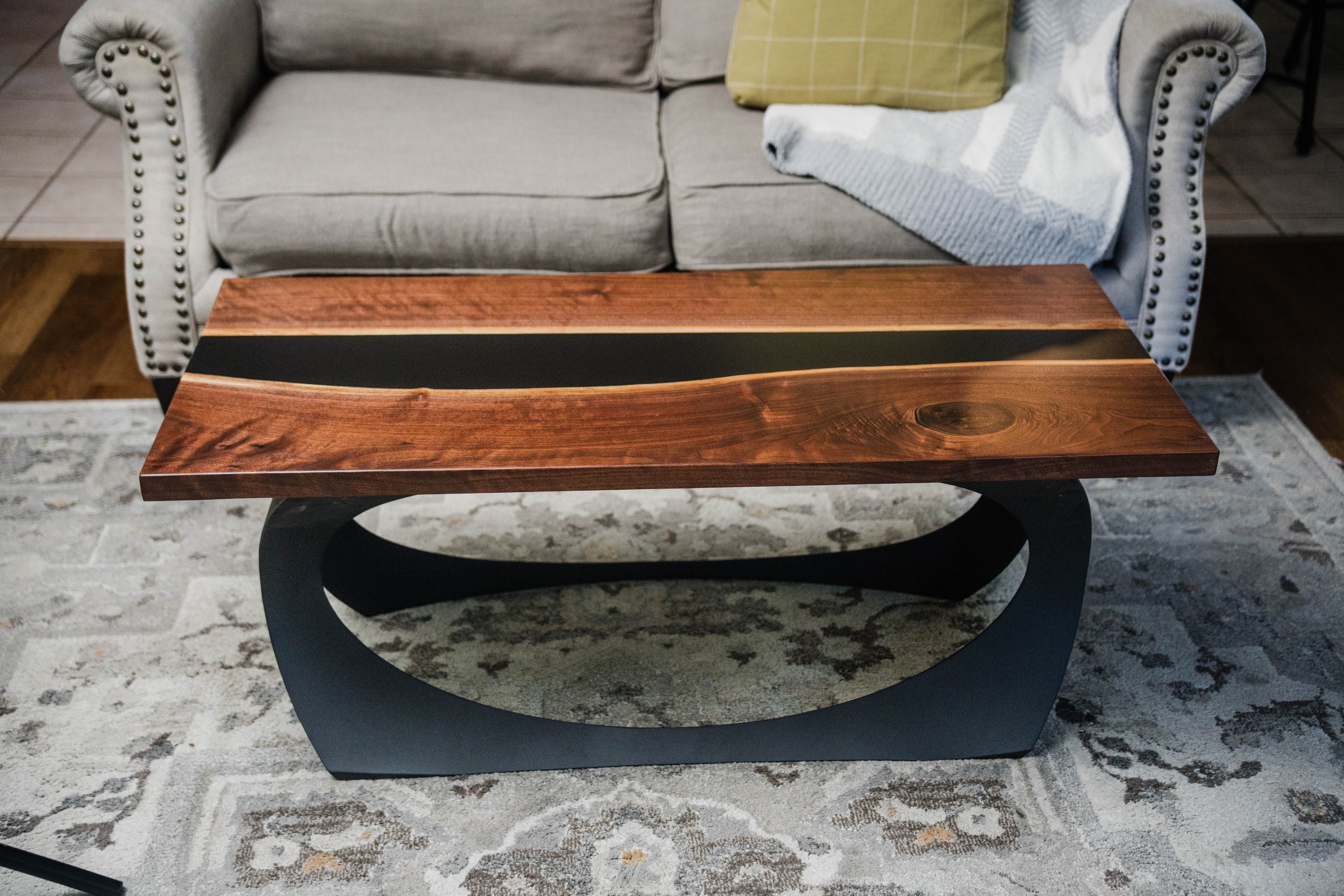
Dark, rich, sophisticated. Walnut has a chocolate-brown tone with lighter sapwood streaks that give it character. It's medium-weight and dense, which means it's durable without feeling like you're moving a boulder. The grain is usually straight with occasional waves that catch the light.
Over time, walnut lightens slightly and develops a warm patina. In ten years, it'll look even better than the day it was built.
Oak
Classic, strong, dependable. Oak has a pronounced grain pattern—those Cathedral arches and flecks that give it texture. It's heavier than walnut and incredibly hard, which makes it nearly indestructible. White oak has a cooler, greyish tone. Red oak leans warmer.
Oak darkens with age, especially if it gets sunlight. It's the wood your great-grandparents probably had in their home, and it's still standing.
Cherry
Warm, smooth, elegant. Cherry starts out light—almost blonde—but deepens to a rich reddish-brown over the years. It has a fine, subtle grain and a satin-like surface that feels luxurious under your hand.
Cherry changes the most dramatically over time. In five years, it'll be noticeably darker. In twenty, it'll glow.
Tip from the craftsman: Choose wood for how it will look in ten years, not just one. If you love the way cherry darkens or walnut warms up, you're making the right choice.
Pick the Right Table Shape
Shape dictates flow. And in Tulsa homes with open living layouts, flow matters.
Rectangular
The workhorse. Fits most rooms, seats the most people, and tucks nicely against a wall if you need it to. Rectangular tables work in narrow dining rooms and long spaces. They're formal enough for dinner parties and casual enough for cereal.
Round
The peacemaker. No one's stuck at the end. Everyone faces each other. Conversation flows easier. Round tables work beautifully in smaller spaces or square rooms, and they're safer for homes with little kids (no sharp corners to run into).
Tip from the craftsman: Round tables solve more seating conflicts than any other shape. No hierarchy. No head of the table. Just people.
Oval
The compromise. You get the softness of a round table with the length of a rectangle. Oval tables fit more people than rounds but feel less formal than rectangles. They work well in transitional spaces where the dining room opens into the kitchen or living room.
Square
The intimate option. Square tables seat four comfortably, maybe six if you squeeze. They're perfect for breakfast nooks, smaller homes, or couples who don't host often. They feel cozy, not crowded.
What works best in Tulsa?
Open-concept layouts dominate here. Rectangular and oval tables handle that the best—they define the dining zone without blocking sightlines. But if your space is tighter or more traditional, a round table keeps things open and breathable.
Understand Your Finish Options
Finish protects the wood. But it also changes how the table looks, feels, and wears.
Matte
Low sheen. Natural texture. Matte finishes look raw and organic—like the wood is barely touched. They hide fingerprints and smudges better than gloss, but they can show water rings if you're not careful.
Satin
The middle ground. Satin has a soft luster that catches light without looking shiny. It's smooth to the touch, forgiving with daily use, and still shows off the wood grain. This is the most popular finish for families.
Gloss
High shine. Dramatic. Glossy finishes make wood look almost glass-like, which is stunning in formal settings. But they show every fingerprint, every scratch, every smudge. They're beautiful. They're also high-maintenance.
Daily Durability
A good finish isn't just about looks—it's about protection. At Five Feathers, we use a long-wear finishing process that builds up layers over time. Each coat soaks into the wood and hardens, creating a surface that resists heat, moisture, and everyday wear.
Your table should handle a hot casserole dish, a spilled glass of wine, and a week's worth of mail without flinching.
Tip from the craftsman: A good finish should feel smooth under the fingertips, not sticky. If it feels tacky or soft, it's not cured properly.
Build for Real Life
Custom tables aren't museum pieces. They're workhorses.
Kids
Crayons. Play-Doh. Homework battles. Juice spills. A custom table built with a durable finish and solid joinery will outlast all of it. You shouldn't have to stress every time a kid sets down a marker.
Daily Meals
Three meals a day. Coffee mugs. Laptop work sessions. The table becomes the hub. It needs to feel sturdy, not wobbly. It needs to clean up easily, not stain permanently.
Guests
Thanksgiving. Game nights. Book club. Your table should expand (literally or figuratively) to handle extra people without feeling cramped or fragile.
Pots and Pans
Family-style serving means hot dishes hit the table. A quality finish protects against heat marks. A solid top doesn't warp or buckle.
Pets
Dogs brush past. Cats jump up. Tails wag into table legs. A custom table with proper joinery and weight won't tip, scratch, or shift.
Tip from the craftsman: Choose a finish that forgives small mistakes. Life happens. Your table should handle it without you losing sleep.
Style and Intent
Style isn't about following trends. It's about telling your home's story.
Modern
Clean lines. Minimal detail. Metal or wood bases with sleek tops. Modern tables work in homes with open spaces, neutral palettes, and intentional design. They don't shout. They anchor.
Traditional
Turned legs. Carved details. Rich, dark finishes. Traditional tables feel formal and timeless. They're the ones you see in old family photos, still standing strong.
Farmhouse
Thick tops. Chunky legs. Distressed finishes. Farmhouse tables feel lived-in from day one. They're casual, warm, and built for gathering. They work in homes with shiplap, vintage touches, and a little bit of charm.
Mid-Century
Tapered legs. Walnut tones. Simple elegance. Mid-century tables nod to the '50s and '60s without feeling retro. They're sleek but warm, structured but approachable.
How to match the table to your home's story:
Walk through your space. What do you see? What do you feel? Does your home lean cozy or clean? Warm or cool? Casual or curated?
Your table should feel like it's always been there—not like you forced it in.
Tip from the craftsman: Pick the style that feels like home, not the style trending on screens. Trends fade. Your story doesn't.
Set a Real Budget
Custom doesn't mean unaffordable. It means intentional.
What affects price:
Size. Bigger tables use more wood, more finish, and more time.
Wood type. Walnut costs more than oak. Rare woods cost even more.
Design complexity. Simple tables cost less than tables with inlays, curves, or custom details.
Finish. Hand-rubbed finishes take longer than sprayed ones.
General ranges:
Simple designs in oak: Start around $2,000–$3,500
Mid-range walnut or cherry tables: $3,500–$6,000
Complex, large, or highly detailed pieces: $6,000+
These are ballpark numbers. Every table is different.
Tip from the craftsman: Invest once in an heirloom that outlives trends. You'll stop replacing furniture and start passing it down.
Why Custom in Tulsa
Buying local isn't a tagline. It's a decision.
Local Lumber
Wood sourced closer to home means you know where it came from. It's been dried properly, milled carefully, and chosen intentionally.
Local Craftsmen
You're not emailing a warehouse across the country. You're talking to the person building your table. That conversation matters.
Intentional Build Cycles
Custom shops don't churn out tables on an assembly line. They take limited orders, focus on quality, and build with care. Your table isn't rushed. It's crafted.
Faster Communication
Questions? Changes? Updates? You're talking to someone in the same time zone, often in the same city. That makes the process smoother.
Tip from the craftsman: The build process should feel calm, not rushed. If it feels frantic, something's wrong.
The Process with Five Feathers
Here's how it works:
1. Inquiry
Reach out. Share your vision, your space, your needs. We'll ask questions, take measurements, and start dreaming with you.
2. Design
We'll sketch options, talk through shapes and styles, and refine the design until it feels right. This is collaborative—not a one-way pitch.
3. Wood Selection
We'll walk you through wood options and help you choose based on how you live, not just how it looks in photos.
4. Build
Your table goes into the shop. We take our time. We don't rush joinery, finishing, or final details. You'll get updates along the way.
5. Delivery
We deliver and set it up in your home. You don't lift a finger.
Limited Orders
We only take a handful of projects at a time. That's intentional. It keeps quality high and stress low.
Tip from the craftsman: The first conversation sets the tone for the entire build. If it feels good, the rest will too.